


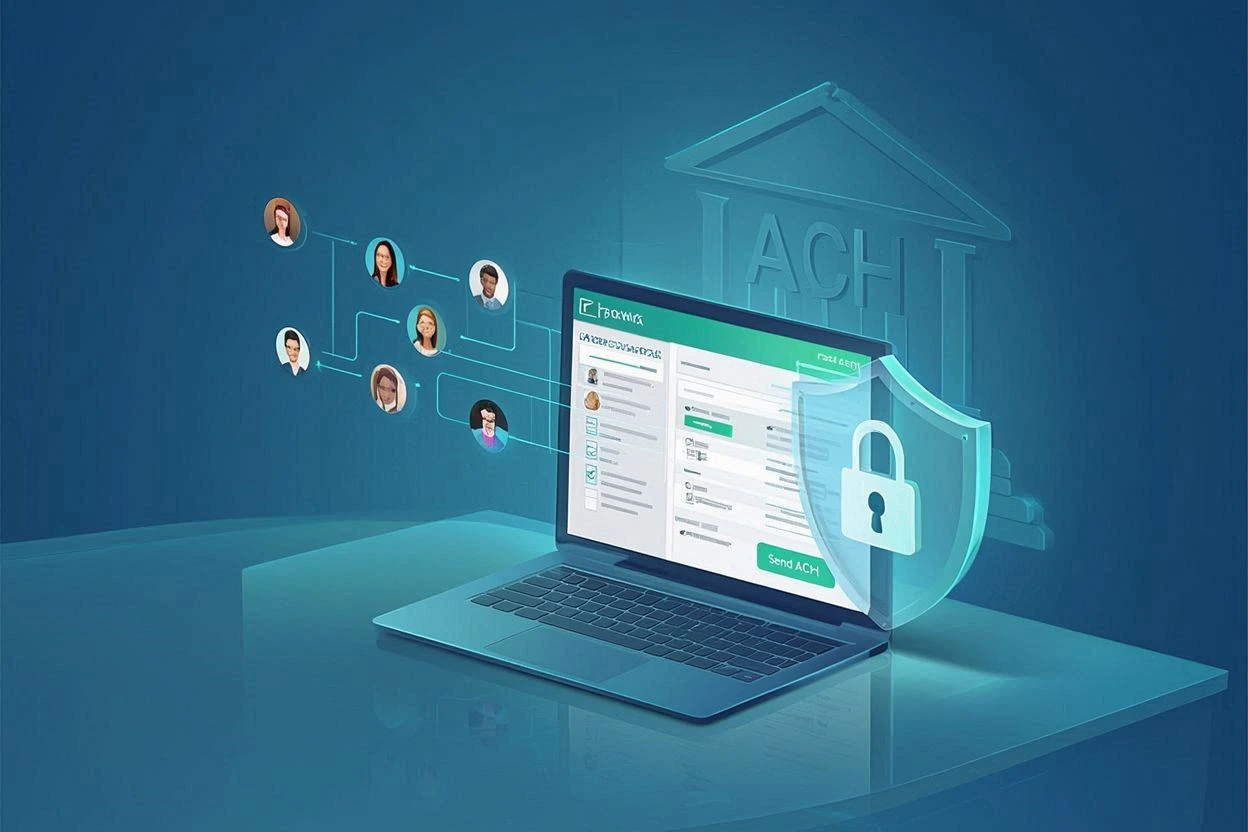
Introduction to ACH Payroll
Management employee compensation is a complex process, requiring timely and accurate payments while ensuring compliance with relevant regulations. The Automated Clearing House (ACH) payroll system streamlines this process by directly transferring salaries to employees’ bank accounts, thus reducing manual errors, paperwork, and enhancing payment security. As businesses grow and their workforce dynamics change, ACH payroll becomes vital for efficient financial operations. With enhanced efficiency and reduced risk of error, many organizations now embrace digital solutions, such as secure ACH payroll payments, as a cornerstone of their payroll management. ACH payroll not only facilitates on-time payments but also delivers adaptability to fluctuating workplace demands and regulatory requirements. This adaptability is crucial as companies manage seasonal employment, remote and hybrid workforces, and rapid organizational growth.
ACH payroll utilizes a regulated electronic network for credit and debit transactions in the U.S., ensuring security and compliance for payroll funds and employee information. This system supports direct deposits for millions of employees, integrating payroll management into business continuity. Modern ACH-powered payroll systems offer scalable and reliable solutions, enabling companies to achieve transactional efficiency and strategic advantages in response to emerging financial technologies and market trends.
Benefits of ACH Payroll for Businesses
When businesses transition from manual payment methods to ACH payroll, administrative duties become significantly lighter. With automated transfers, HR and finance teams can significantly reduce the time spent processing payroll cycles, allowing their staff to focus on higher-value tasks such as data analysis and talent management. This automation minimizes costly errors arising from manual data entry, such as entering incorrect amounts, missing deadlines, or misrouting payments, and ensures employees receive their compensation promptly every pay period. The consistent and predictable delivery of paychecks helps reduce employee anxiety and fosters trust between employers and their workforce.
Enhanced accuracy leads to increased employee satisfaction and improved trust in payroll processes. When employees enjoy hassle-free compensation and financial clarity, they are more likely to stay engaged and loyal to their organization. ACH’s digital recordkeeping also streamlines auditing, troubleshooting, and reporting, all of which contribute to more effective business operations and easier compliance with regulatory requirements. Having a transparent, traceable digital trail available at all times simplifies both internal and external audits, saving the business additional time and money.
Cost-Effectiveness of ACH Payroll
Traditional payment methods, such as paper checks or wire transfers, often result in unnecessary expenses, including printing, postage, and banking fees. Some businesses also bear indirect costs such as labor hours spent distributing checks or reconciling payment errors. In contrast, ACH payroll transactions come with notably lower fees, translating into long-term savings for organizations of any size. The efficiency of ACH not only reduces processing costs but also minimizes the need for extensive workforce allocation toward payroll management. As payroll cycles become increasingly automated, companies can reassign employees to higher-priority projects, rather than spending time on repetitive administrative tasks.
Over time, businesses embracing ACH payroll benefit from both lower operational costs and reduced error-related losses. Mistakes, such as lost checks or double payments, can be expensive and erode employee trust, but ACH’s automation significantly reduces these risks. Organizations that switched to automated payroll systems consistently reported higher productivity and the ability to redirect resources to core business activities, such as growth initiatives, employee development, or product innovation.
Automated Tax Compliance and Reporting
One standout advantage of ACH payroll is its support for automated tax compliance. Payroll software equipped with ACH capabilities can calculate, withhold, and remit taxes—ensuring timely and accurate submissions to local, state, and federal authorities. These features help businesses stay ahead of continually evolving laws, reducing the risk of noncompliance and penalties that can be both costly and damaging to their organizational reputation. Managing payroll taxes manually introduces a high risk of human error, which ACH automation largely mitigates.
Additionally, electronic reporting and built-in reminders mitigate the need for manual tracking of deadlines and rule updates. Automation in this sector enables businesses to focus on operations with confidence in their tax obligations being managed correctly. This peace of mind is particularly valuable for small businesses and startups with limited administrative resources, who may struggle to keep up with regulatory changes on their own.
Integration with Banking and Financial Platforms
ACH payroll’s integration with banking ecosystems presents a unified view of a company’s cash flow, payroll outflows, and tax settlements. Many banks now provide embedded payroll tools, allowing users to initiate payroll runs, view pending transactions, and reconcile accounts from a single online dashboard. By consolidating payroll and banking operations, businesses gain real-time insight into their liquidity and can make informed financial decisions quickly. This linked approach brings unparalleled convenience and financial visibility, which can be a powerful differentiator in a competitive business landscape.
Several leading banks have launched embedded payroll solutions, offering enhanced transparency for small business owners and financial managers. For more details on these developments, explore U.S. Bank’s recent launch of an embedded payroll solution and its anticipated impact on the small business sector. Businesses can benefit from more responsive customer support, faster reconciliations, and streamlined operations, allowing for greater focus on strategic goals.
Security Measures in ACH Payroll Systems
Security is a central concern in any payroll system, particularly those handling sensitive banking information. ACH payroll platforms utilize advanced encryption to safeguard data during transmission and at rest, ensuring that payroll information remains secure and cannot be intercepted or tampered with during processing. Multi-factor authentication and strict access controls are standard features that safeguard both employee and company financial details from unauthorized access. Companies can manage user permissions precisely, limiting access to those who genuinely need it.
Additionally, these systems are typically equipped with fraud monitoring tools that flag unusual transaction patterns, ensuring issues are detected and addressed before they can escalate. Employees and administrators are often alerted in real-time if suspicious activity occurs. This robust focus on security helps build confidence among users and employees alike, allowing organizations to focus on their core objectives without fear of data breaches or financial fraud.
Real-World Applications and Case Studies
Many organizations have experienced transformative results after implementing ACH payroll. For instance, medium-sized retailers report expedited pay cycles, fewer paycheck errors, and elevated employee morale as staff come to trust the reliability and punctuality of direct deposits. Tech companies leveraging ACH-based platforms have achieved simplified compliance workflows and seamless multi-state payroll management, making complex payroll tasks easier for organizations with employees in multiple locations and jurisdictions. These successes demonstrate not only operational improvements but also increased employee satisfaction, which is key to talent retention and organizational growth. Often, positive changes in payroll systems lead to improved company culture, as employees experience greater confidence in their employer’s ability to manage their compensation reasonably and efficiently.
Conclusion
ACH payroll solutions are transforming the way businesses manage compensation, streamline operations, and ensure compliance. By reducing manual workloads, enhancing financial control, and providing top-tier data security, ACH payroll empowers businesses to embrace a future-ready approach. As regulatory and employee demands continue to evolve, adopting ACH payroll can offer the efficiency and security modern organizations require to thrive. Employers who leverage these systems are prepared to meet the growing expectations of today’s workforce and the compliance landscape of tomorrow.















Leave a comment