


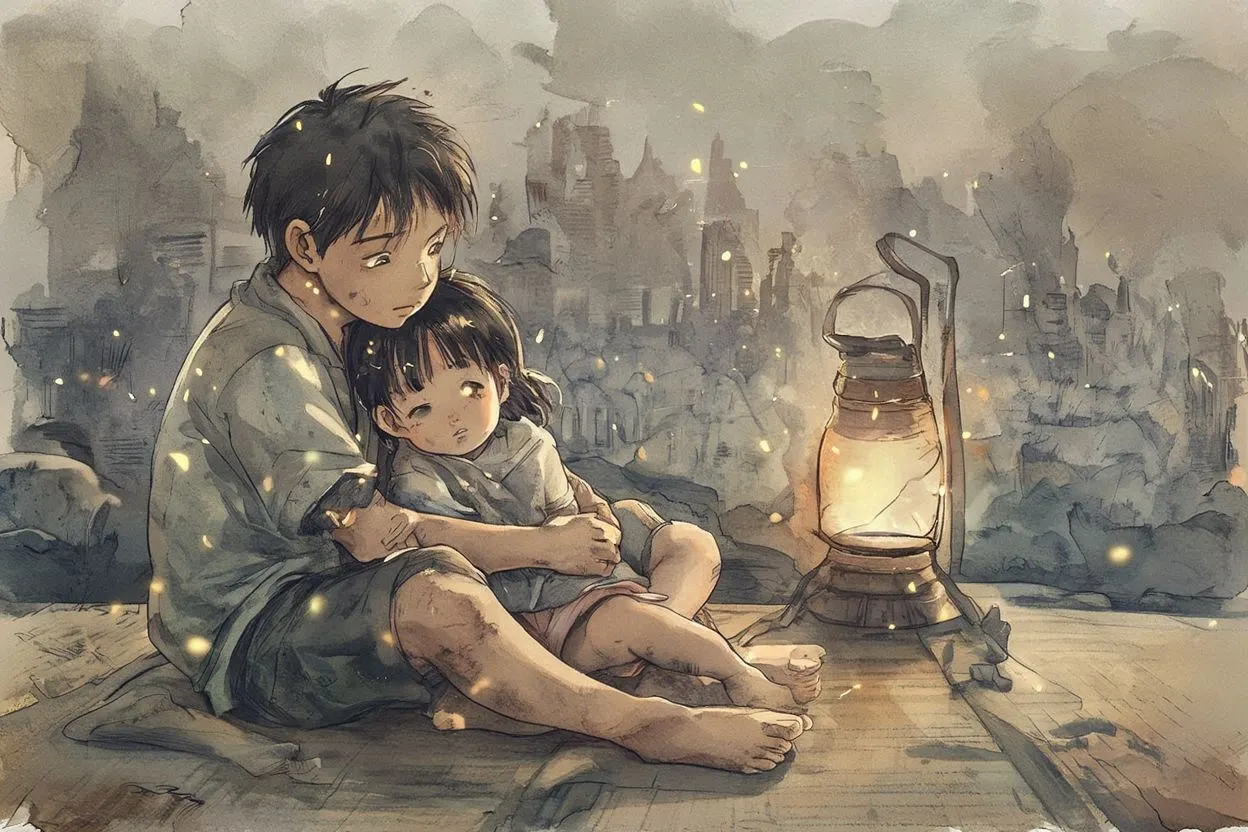
The hotaru no haka film, internationally known as “Grave of the Fireflies,” stands as one of Studio Ghibli’s most emotionally devastating works. Released in 1988 and directed by Isao Takahata, this animated masterpiece tells the tragic story of two siblings struggling to survive during World War II in Japan. Unlike typical war films that focus on battlefields, this film examines the devastating impact of conflict on innocent civilians, particularly children. The narrative follows fourteen-year-old Seita and his four-year-old sister Setsuko as they navigate a world torn apart by firebombing raids and societal collapse. The film’s raw emotional power and unflinching portrayal of suffering have made it an enduring classic that continues to resonate with audiences worldwide.
The Historical Context Behind Hotaru no Haka Film
The hotaru no haka film draws from Akiyuki Nosaka’s semi-autobiographical short story, reflecting real experiences from wartime Japan. Set during the final months of World War II, the film depicts the aftermath of American firebombing campaigns that devastated Japanese cities. The story captures the breakdown of social structures as resources became scarce and communities struggled to survive. Takahata’s adaptation doesn’t shy away from showing how war destroys not just infrastructure but also human compassion and familial bonds. The historical accuracy in depicting wartime hardships—from food shortages to the collapse of community support systems—gives the film authentic weight. This historical grounding transforms the narrative from mere animation into a powerful documentary-like testament to civilian suffering during wartime.
The Artistic Excellence of Hotaru no Haka Film
Visually, the hotaru no haka film showcases Studio Ghibli’s renowned animation artistry at its finest. The contrast between beautiful, serene imagery of fireflies and the harsh reality of war creates a poignant juxtaposition that amplifies the film’s emotional impact. Takahata employs a naturalistic animation style that differs from Hayao Miyazaki’s more fantastical approach, grounding every frame in grim reality. The color palette shifts from warm, nostalgic tones in flashback sequences to cold, desaturated hues depicting the children’s deteriorating circumstances. The attention to detail in depicting 1940s Japan—from architectural elements to period-appropriate clothing—demonstrates meticulous research and artistic commitment. This visual storytelling communicates volumes without dialogue, making the film’s message universally understandable regardless of language barriers.
Character Development in Hotaru no Haka Film
The hotaru no haka film centers on the deeply moving relationship between Seita and Setsuko. Seita represents adolescent pride and the burden of responsibility thrust upon children during wartime. His determination to protect his sister and maintain their independence, while admirable, ultimately contributes to their tragic fate. Setsuko embodies innocence gradually eroded by harsh reality, her childlike wonder and playfulness providing heartbreaking contrast to their desperate circumstances. The film avoids villainizing individual characters, instead showing how ordinary people become hardened by survival instincts. Their aunt, often viewed as antagonistic, represents the difficult choices civilians faced when resources dwindled. This nuanced character portrayal makes the film’s tragedy feel inevitable rather than manufactured, deepening its emotional authenticity.
The Universal Themes in Hotaru no Haka Film
Beyond its specific historical setting, the hotaru no haka film explores timeless themes of loss, innocence, and human dignity. The fireflies serve as powerful symbols—beautiful yet ephemeral, representing fleeting moments of joy in overwhelming darkness. The film examines how pride and stubbornness can lead to tragedy, as Seita’s refusal to reconcile with his aunt stems partly from wounded dignity. Themes of hunger, both physical and emotional, permeate the narrative as the children starve for food, connection, and normalcy. The film questions societal values during crisis, showing how compassion becomes luxury when survival is threatened. These universal themes ensure that the hotaru no haka film remains relevant across cultures and generations, speaking to fundamental human experiences of suffering and resilience.
The Lasting Legacy of Hotaru no Haka Film
The hotaru no haka film has profoundly influenced animation and war cinema since its release. Critics consistently rank it among the greatest animated films ever made, praising its emotional honesty and anti-war message. Unlike propagandistic war films, it refuses to glorify conflict or offer false comfort, instead presenting war’s brutal reality with unflinching clarity. The film has educated countless viewers about civilian experiences during World War II, fostering empathy across cultural divides. Its influence extends beyond cinema, inspiring discussions about war’s human cost, children’s vulnerability during conflict, and society’s responsibility toward its most vulnerable members. The hotaru no haka film stands as testament to animation’s capacity for serious artistic expression, proving that animated films can address profound themes with sophistication and emotional depth.
Conclusion
The hotaru no haka film remains an essential cinematic experience that challenges viewers to confront war’s devastating human toll. Through stunning animation, authentic historical detail, and profound emotional depth, Takahata created a timeless masterpiece that transcends its medium. The film’s refusal to provide easy answers or comfortable resolutions distinguishes it from conventional war narratives, instead offering honest portrayal of tragedy and loss. Its enduring impact on audiences worldwide demonstrates cinema’s power to foster empathy and understanding across generations. Though difficult to watch, the hotaru no haka film is necessary viewing for anyone seeking to understand war’s true cost—measured not in strategic victories but in innocent lives forever changed or lost.













Leave a comment